Virtual Reality: Where Science Meets Innovation
How VR Transforms Science Learning
Making Abstract Concepts Tangible VR turns abstract scientific ideas into fully explorable 3D environments. Students can step inside a human cell, manipulate molecules, observe planetary orbits from a first-person perspective, or travel through the circulatory system to see veins, arteries, and heart chambers up close.
Virtual Field Trips Students can explore places they couldn’t otherwise access:
- Dive into coral reefs to study marine biology
- Visit the surface of Mars or the International Space Station
- Explore ancient ecosystems or walk among dinosaurs
- Tour the inside of volcanoes or the human digestive system
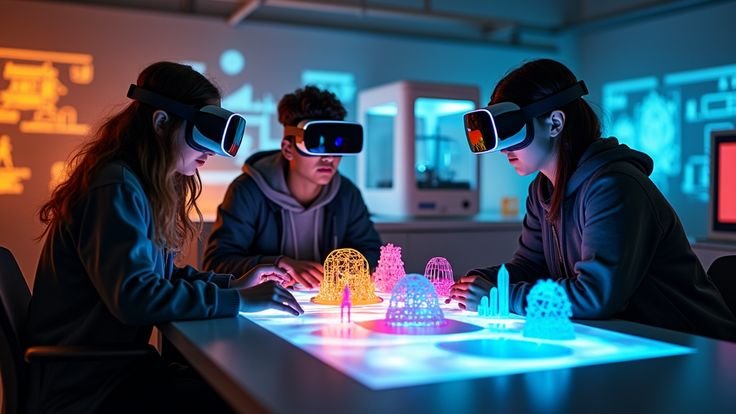
Safe Virtual Labs Virtual labs allow students to conduct experiments in a risk-free environment.
They can: Mix volatile chemicals without safety concerns
Perform dissections digitally
Repeat experiments multiple times without material costs
Practice medical procedures before working on real patients
Key Benefits for Science Education
Improved Engagement & Retention Studies show students using VR tools in science education scored 22% higher due to enhanced engagement and experiential learning. The immersive nature keeps students focused and naturally curious.